A two-point play, two overtimes, and a statement win
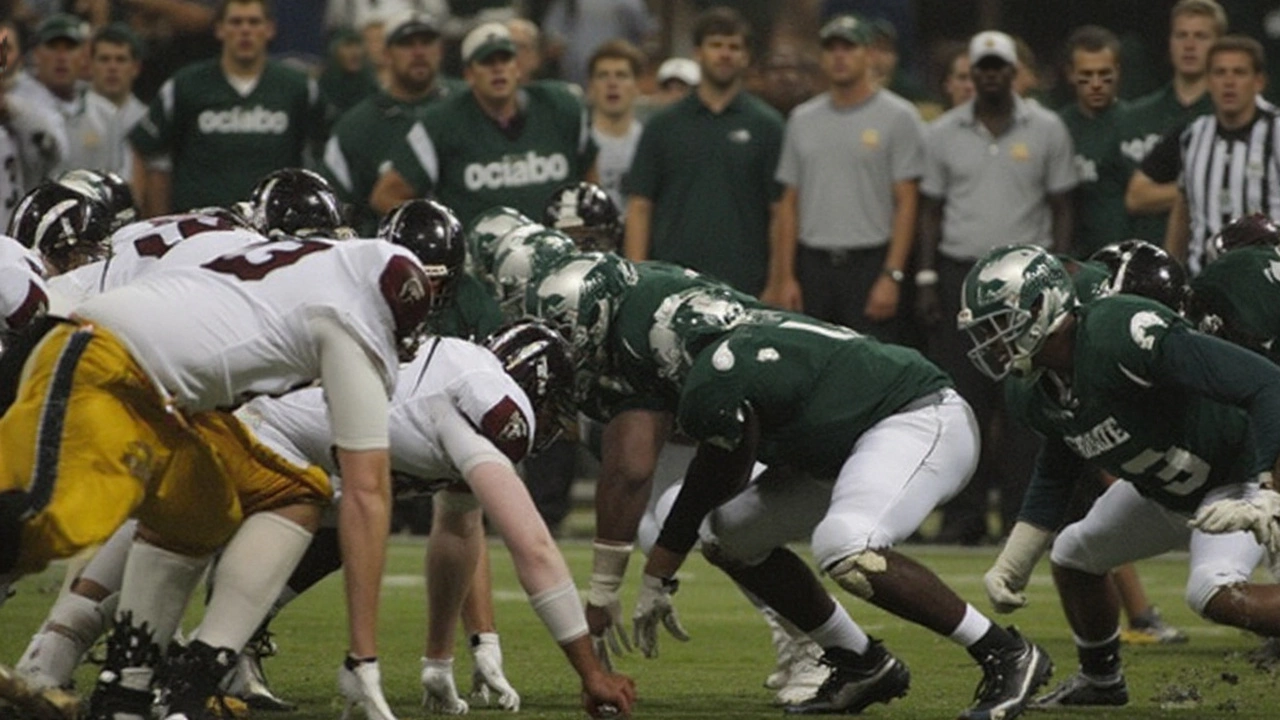
Two overtimes, one gutsy conversion, and a quarterback who refused to blink. Michigan State outlasted Boston College 42-40 at Spartan Stadium on Saturday night, a game that swung late and may have changed the tone of the Spartans’ season. The finish belonged to junior quarterback Aidan Chiles, who powered in a 3-yard touchdown in the second overtime and then fired the game-winning two-point pass to Omari Kelly.
The result pushed Michigan State to 2-0 and handed Boston College its first loss, now 1-1. It also checked a box the program had chased since Jonathan Smith took over: a strong second half against an FBS opponent. The Spartans trailed 21-14 at the break and then found enough poise and precision to flip the script after halftime.
Chiles’ line told most of the story. He went 19-for-29 for 231 yards and a career-best four passing touchdowns and added 39 yards on the ground with one rushing score. He made the throws that mattered, but he also bought time, extended drives with his legs, and kept the offense calm when the game got loud.
On the other sideline, Boston College’s Dylan Lonergan kept dealing. He completed 34 of 45 for a career-high 390 yards and four touchdowns, spreading the ball and forcing Michigan State to defend the full field. The Eagles moved the chains through the air and did it often enough to drag the game into extra time.
Regulation ended with a Boston College push. Down 27-24 late, the Eagles tied it with a 38-yard field goal from Luca Lombardo with 76 seconds left. Both teams had their chance to win it in the final minute, but the defenses held and overtime loomed.
In the first overtime, Michigan State struck first on a quick-hitting throw from Chiles to Jay Coyne for a 5-yard touchdown. Lonergan answered in kind, hitting Jeremiah Franklin on a 6-yard score to level it again. It was clean, efficient football from both offenses, and it set up a tense second extra frame.
The second overtime forced both teams into the rulebook’s pressure cooker. Starting in the second OT, a touchdown must be followed by a two-point try. Boston College went first and punched in an 8-yard rushing touchdown by Turbo Richard. But the two-point attempt fell flat, and that gave Michigan State a clear target: score, then convert.
Chiles did both. He followed a patient run scheme for a 3-yard touchdown, then zipped the game-winner to Kelly. The stadium exhaled, and the Spartans had their first real “finish” under Smith. If you were looking for a September moment, this was it—the Michigan State vs Boston College matchup delivered every ounce of drama.
The box score backed up the eye test. Nick Marsh gave the Spartans a reliable downfield option with five catches for 68 yards and two touchdowns. Makhi Frazier steadied the ground game with 81 yards on 17 carries, keeping the offense on schedule in the third and fourth quarters when it mattered most.
Boston College had weapons of its own. Lewis Bond caught 11 passes for 90 yards, a steady outlet who kept drives alive. Richard did a bit of everything—55 rushing yards and a touchdown on the ground, plus seven catches for 66 yards and another score. The issue, again, was balance. For the second week in a row, the Eagles struggled to run the ball consistently and finished with just 67 rushing yards.
Bill O’Brien did not sugarcoat it. “We’re not going to be able to throw the ball 55 to 60 times a game,” he said after the loss. “I don’t think that’s a recipe for winning, so we’ve got to figure it out.” He’s right. The passing attack is good enough to beat most teams. But when the field shrinks in the red zone or on a two-point play, power matters.
Michigan State found answers after halftime. That’s the piece that will stick in East Lansing. Smith’s team had not outscored an FBS opponent in the second half during his tenure until this night. The defense tightened windows, the offense leaned into quick reads and rhythm throws, and the run game gave Chiles manageable third downs.
Linebacker Jordan Hall set the tone on defense with a career-high 15 tackles, nine solo. He played downhill, cleaned up space in the flat, and helped limit yards after the catch once BC receivers crossed the sticks. Veteran help mattered, too: Wayne Matthews III, Armorion Smith, and Ade Willie each finished with eight tackles, and their stops in space kept big gains from turning into backbreakers.
Hidden yards swung the field, and Michigan State’s special teams owned that lane. Punter Ryan Eckley averaged 54.7 yards on three punts and twice pinned the Eagles at the 1-yard line in the fourth quarter. That kind of field position forces conservative calls and buys a defense breathing room. It echoed his opener against Western Michigan, where he averaged 51.3 yards. This is not a one-week blip; it’s a weapon.
The revenge angle was real. Boston College beat Michigan State 23-19 last season, a loss that lingered. The Spartans had a chance to settle that debt and took it, even after trailing by a touchdown at the half and even after BC squared the score in the final minutes. That’s how you change a program’s posture: you win the game that tries to slip away.
There were turning points you could circle. In the third quarter, Michigan State’s offense moved faster out of the huddle and got Chiles into simple reads—boundary throws, slants, and quick outs that dented BC’s cushion. Marsh’s physical route running softened the corners. Frazier’s inside runs pulled defenders down, which opened space for the play-action shots that set up scores.
On the other side, Lonergan never looked rattled. He shifted protections, found his backs on checkdowns, and took what the defense gave him. The Eagles marched when they needed to. But in overtime, two plays decided everything: their failed two-point attempt and Michigan State’s successful one. Those are razor-edge moments, and Saturday they cut BC’s way once and the Spartans’ way last.
Coaches will obsess over the situational tape. Third downs, red-zone snaps, late-game clock control—these are the levers that stacked up to a two-point margin. Michigan State’s decision to keep the ball in Chiles’ hands in the highest-leverage moments made sense. He was accurate, he protected the ball, and he handled pressure without panic.
For Boston College, the path forward is obvious. The passing game is potent with Lonergan distributing to Bond, Franklin, and Richard. But a one-dimensional offense leaves no margin for error when the game turns into a short-field chess match. O’Brien’s postgame message about balance wasn’t coach-speak; it was a roadmap.
Smith praised his team’s resilience: “I’m really proud of the guys just continuing to fight. It came down to us getting a stop on a two-point conversion and us executing to finish the deal.” That’s the team Michigan State wants to be—tough at the edges, good at the margins, and calm when it feels like the whole season is hanging on a single snap.
Beyond the box score, there were identity hints. Michigan State can win with field position, can win through the air, and can win by letting its quarterback make the last decision. The defense still gave up chunk yardage through the air, but it stiffened when it had to. That trades splash plays for stops. It’s not perfect, but it travels.
Michigan State also showed a willingness to adjust. Early, the Spartans leaned into motion and misdirection to stress the Eagles horizontally. Later, they pared it down, trusted the offensive line, and let Chiles key on leverage. That blend—window dressing when needed, straight-ahead when not—kept Boston College from loading the box or jumping routes.
Boston College’s locker room will point to a handful of missed chances: a stalled second-half drive when Eckley pinned them deep, a red-zone snap that unraveled under pressure, the two-point play in double overtime that didn’t land. These aren’t fatal flaws, but in a one-possession game with long field stretches, they add up. The fix is balance, then a little more edge on defense.
As for the schedule, both teams turn quickly. Michigan State stays home to host Youngstown State on September 13, a chance to build on the rhythm and clean up the coverage leaks before Big Ten play heats up. Boston College flies west to face Stanford the same day in the ACC opener for both. It’s a long trip after an emotional game, and it will test the Eagles’ ability to run the ball and control tempo.
Two weeks into September, you don’t crown anyone. But you can spot signs. Michigan State found a second-half gear it had been missing and learned it could close. Boston College learned its quarterback can go toe-to-toe with anyone, but the offense needs more than a hot hand to win on the road in tight games.
Saturday night gave us the first true heavyweight finish of the young season: a quarterback answering the bell, a defense getting one stop when it had to, and a two-point play that decided everything. For Michigan State, it was more than a win. It was a compass point.
What we learned and what’s next
- Michigan State has a closer: Aidan Chiles accounted for five touchdowns (four passing, one rushing) and made the key two-point throw in 2OT.
- BC can sling it, but balance is missing: Dylan Lonergan threw for 390 yards and four scores, yet the Eagles ran for just 67 yards.
- Field position matters: Ryan Eckley’s 54.7-yard average and two punts downed at the 1-yard line shaped the fourth quarter.
- Defensive spine showed up: Linebacker Jordan Hall posted 15 tackles, with three other Spartans registering eight apiece.
- Program note: This marked the first time under Jonathan Smith that Michigan State outscored an FBS opponent after halftime.
Next up: Boston College travels to Stanford for its ACC opener on September 13. Michigan State hosts Youngstown State the same day, looking to stretch a clean start into early momentum.
Trenton Stryker
Hi, I'm Trenton Stryker, a gaming enthusiast with a passion for all things related to the virtual world. With my extensive knowledge and expertise in various gaming genres, I enjoy writing about the latest trends, sharing tips and tricks, and providing in-depth game reviews. My love for gaming has inspired me to create engaging content that helps fellow gamers stay informed and entertained. Join me on this exciting journey as I continue to explore the ever-evolving gaming universe.